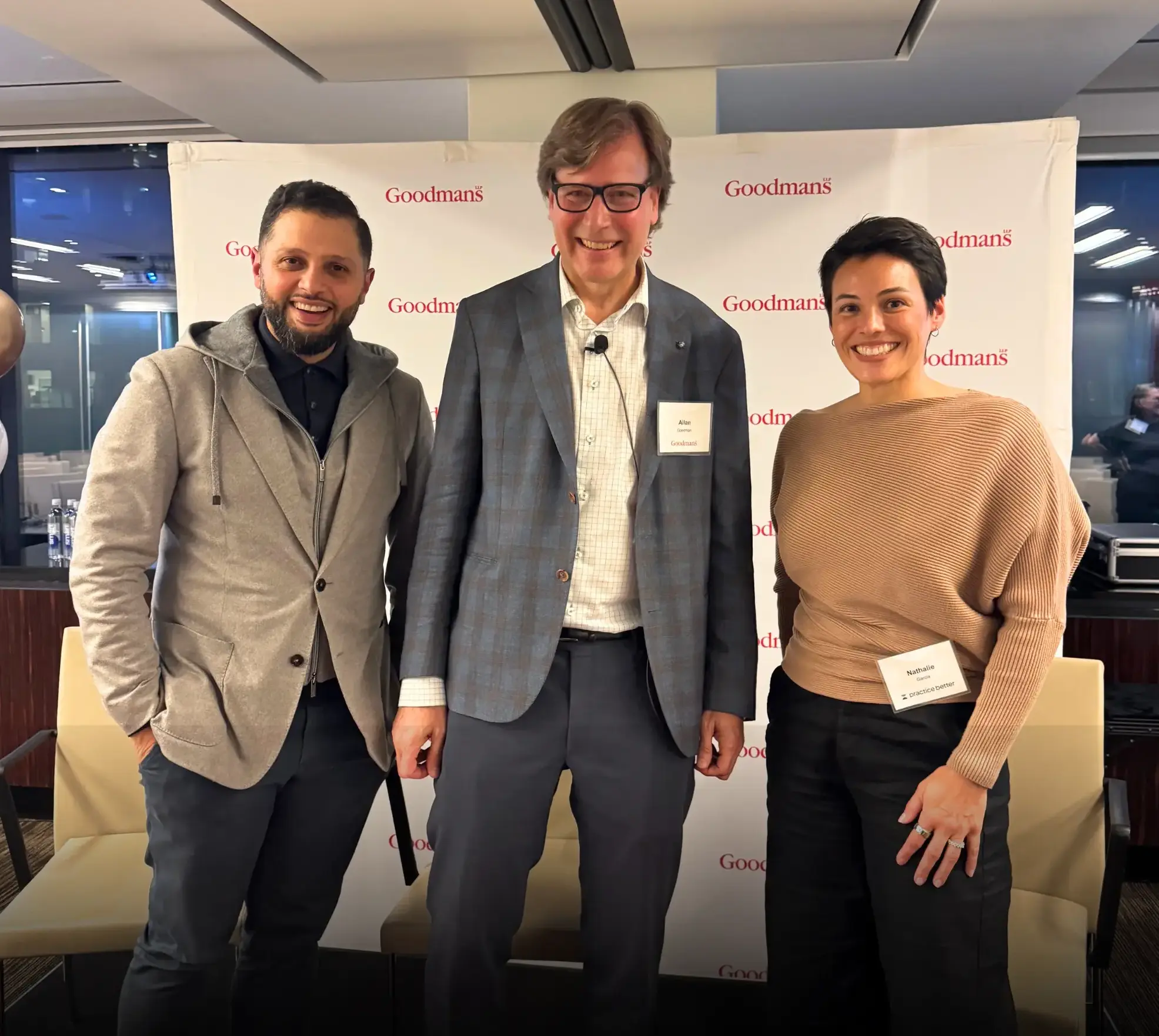
For the past 10 years, Goodmans LLP has been a Partner in Residence at DMZ, working alongside DMZ founders to help them handle the legal side of building a company.
That has meant access to legal guidance, pro bono support and mentorship from lawyers who have seen what works and what doesn’t.
To mark a decade of partnership, we sat down with Allan Goodman, a partner at Goodmans, to look back at how the partnership began, what founders get from it today and what they should know as they continue to build.
From IPOs to incorporation: how Goodmans found DMZ.
As one of Canada’s leading corporate law firms, Goodmans had long been an established leader in mergers and acquisitions, IPOs and other complex corporate matters. The firm recognized an opportunity to build on this experience by engaging with founders earlier in their journeys, providing practical legal guidance to help them establish a strong foundation for growth.
That brought Goodmans to DMZ. The relationship began with workshops and grew into a formal partnership.
The need was clear. Early-stage founders don’t lack ambition, but they often don’t know what comes next, and legal decisions are easy to put off. Goodmans’ legal support empowered them to pause and address the legal issues that matter now, before they become harder to fix.
Three things founders promise to sort out later.
A common reason founders skip early legal work is cost. It can feel like something they can't afford yet, but getting the basics right early saves time and money later.
Here are some of the issues that trip up early-stage companies most often:
- No founder agreement: Friends start a company and plan to sort out the details later. When a co-founder leaves or goals drift, an unwritten deal becomes a dispute.
- Undocumented shares and cap tables: Deals are on the table, but nothing is on paper.
- IP that isn’t assigned to the company: Missing assignments tend to surface during due diligence on an exit.
None of these are complicated, but each one gets harder to fix as time passes after launch.
What early groundwork looked like for two DMZ companies.
When investors or strategic partners express interest, legal due diligence is often the next step. They typically work from a checklist, and a single red flag can put a potential deal at risk. That’s why the focus is on helping founders become investor-friendly. “You want to have the basic plain structure so that when an investor comes and looks at it they say, ‘that’s what I’m used to”, Allan explains.
Two DMZ companies show how early legal groundwork with Goodmans pays off.
Practice Better started at DMZ as a platform for nutrition practitioners to manage consultations and client notes. Goodmans worked with its founders from the company’s earliest stages through fundraising, acquisitions and a sale to a private equity firm. Over the course of five or six years there were plenty of ups and downs, but Allan describes the journey as an amazing story.
Ratio.city’s founders brought years of urban planning experience but needed guidance on the corporate side of building a company. Goodmans met them at DMZ and worked with them through to their acquisition by Esri Canada. It was a more modest operation, Allan says, but the founders built it up.
Stories like Practice Better and Ratio.city matter beyond the individual companies, strong early-stage companies are what make Canada’s tech ecosystem grow.
For DMZ founders, legal help is one ask away.
Ten years in, the message is simple: getting the legal basics right early gives founders a stronger foundation to grow. “We’re here to help in so many ways,” Allan says. “Don’t be shy to ask us.”
Here’s to 10 years of building with Goodmans, and to the founders who are next.
Getting the legal basics right early is easier when help is built into your program. If you’re ready to build on a strong foundation, apply to DMZ Incubator.