Attracting nurses, teachers, tradespeople and business leaders to Canada's northern and remote regions has never been more critical.
Communities in these regions are facing a constraint that runs deeper than policy or funding: there is simply nowhere to live.
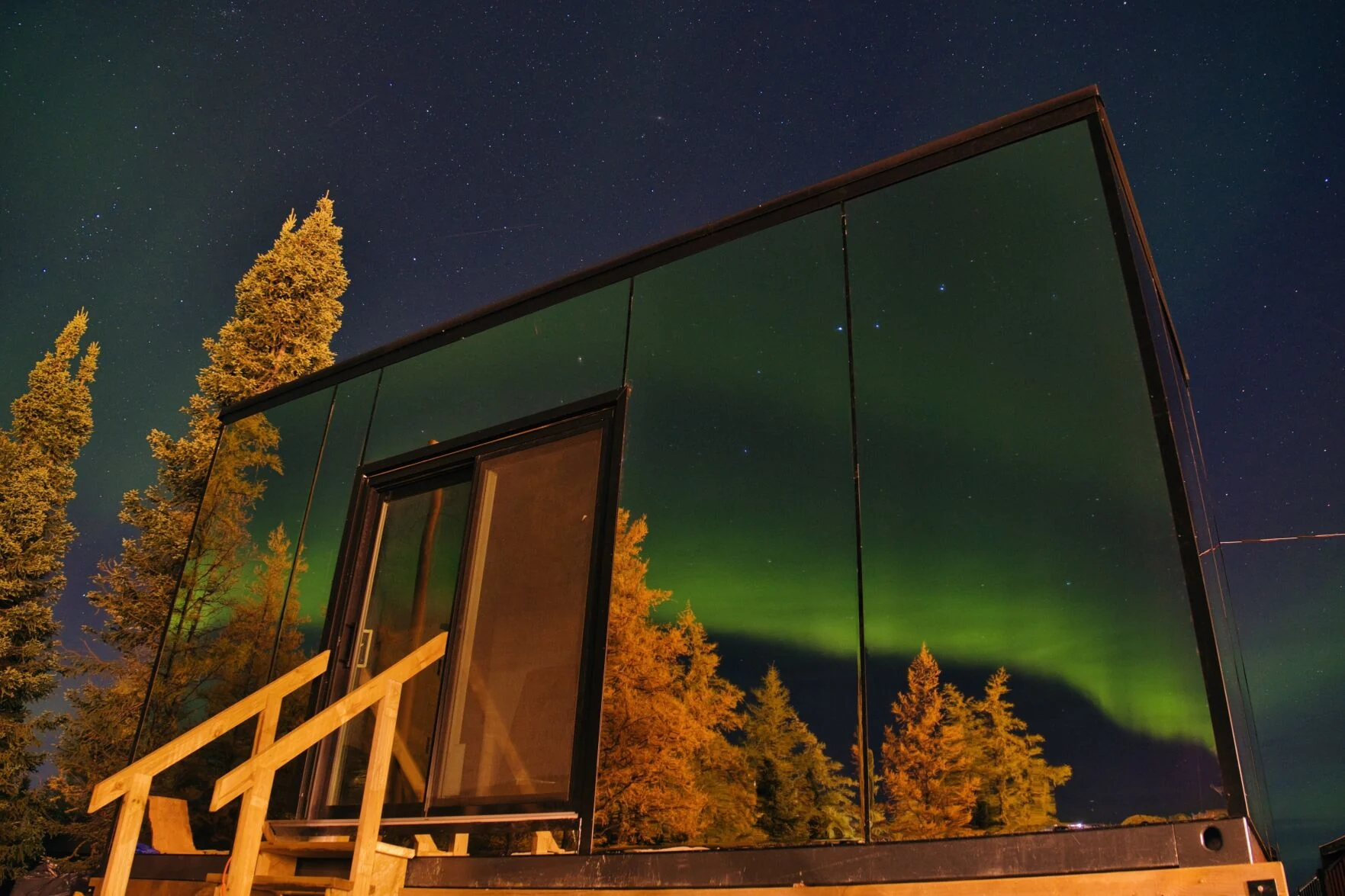
That is where Tinybox Systems, a Toronto-based startup supported through Centre for Housing Innovation (CHI), is stepping in with a faster, lower-cost way to build homes in some of Canada's most challenging environments. Working with the Kativik Regional Government, Tinybox piloted a modular home in the North, demonstrating how purpose-built innovation can break the cycle holding similar economies back.
Why housing is an economic problem, not just a social one.
When communities can't support talent with accommodations, projects slow down, services fall short and local economies can't grow. And as Canada sharpens its focus on Arctic sovereignty and defence, a populated, serviced North is more important than ever. Housing isn't just a social issue, it’s a direct economic and strategic constraint.
In some northern communities, a single home can cost more than one million dollars to build, with transportation and labour alone accounting for much of the total construction costs. Construction seasons are short, weather is extreme and most materials and skilled labour must be flown or shipped in. The result is a cycle that's hard to break: limited housing restricts workforce growth, which limits economic development, which limits investment in new housing.
A modular approach built for northern realities.
Tinybox Systems is rethinking how homes are built by developing modular solutions that can be deployed in regions where traditional construction simply doesn’t work.
Its pilot projects - which span across southern Ontario and some northern communities - put that thinking to the test. A local two-person crew assembled a modular unit in just 10 days at a cost of approximately $90,000 (not including labour costs or utility connections), which is far below what traditional northern builds and communities with limited access typically require.
Tinybox Systems are engineered for extreme conditions, using space-grade insulation, a snow-load–ready structure and improved ventilation systems that reduce mould risk and improve long-term performance.

“To build for Canadians living outside of city centres, one must face the unique challenges of limited infrastructure, rocky soil and complicated shipping,” said Charlie Frise, Co-founder of Tinybox Systems. “A lot of our design philosophy is centred around how we solve these specific problems with low cost, repeatable and dependable solutions.”
Southern Ontario innovation with national potential.
Tinybox’s work in northern communities builds on technology being developed and put into practice right here in southern Ontario. The company has completed projects in communities including Muskoka and Keswick and is currently building its very own office space at Evergreen Brick Works.
From downtown Toronto to cottage country, each environment comes with its own construction challenges and constraints. These projects are giving Tinybox opportunities to apply its modular system across different settings and use cases closer to home. Designed to be flat-packed, transported without oversized loads or cranes and assembled by small crews, the system offers a flexible approach for places where traditional construction can be challenging.
From pilot to economic unlock.
In remote communities where there may not be homes available on the market, employers are forced to either build their own housing or pay hundreds of dollars per night for hotel accommodations — costs that make hiring and retention nearly impossible at scale. It’s a challenge that underscores how critical scalable housing solutions are in remote and also underserved communities across the province and country.
By making housing faster and more affordable to deliver, Tinybox's approach removes a structural barrier to workforce growth and long-term economic development in the region.
Why this matters for northern communities across Canada.
As Canada works to close gaps in northern services, resource development and community infrastructure, housing supply is the foundational constraint. When workers can't find a place to live, every other investment stalls.
Tinybox's project highlights what's possible when local construction innovation is applied to our most pressing housing challenges in northern communities.
By reducing cost, build time and dependency on southern labour markets, solutions like Tinybox help communities attract the people they need to grow.
Tinybox Systems is one of the many startups scaling mission-critical solutions with support from DMZ’s CHI. Learn more about the program at dmz.to/CHI.
DMZ's Centre for Housing Innovation is funded by the Government of Canada, through the Federal Economic Development Agency for Southern Ontario (FedDev Ontario).
Rethinking how Canada builds homes? Applications for DMZ’s CHI Accelerator are open. Apply now.