Most people know me as the Executive Director of DMZ and CEO of DMZ Ventures.
But those are titles and they don't tell you much about how I got here or, more importantly, how I learned to lead.
I didn't learn leadership from a textbook or sitting in a boardroom; a lot of what shaped me happened in places you probably wouldn't expect.
The military, hospitality, my time in Kenya and even moving around constantly as a kid may not seem connected. At the time, they didn't feel that way either, but looking back, each experience shaped how I think about leadership and left me with lessons I still carry with me today.
Accountability means owning the hard stuff.
Here's something most people don't know about me: I joined the Canadian Armed Forces when I was 16.
I served for five years as an Infantry Soldier in the Reserves. I was young, looking for a challenge and wanted to push myself outside my comfort zone. And I definitely got that.
The military taught me discipline, loyalty and accountability. You learn very quickly that your actions affect the people around you. You show up and you do what you said you were going to do. And when things get difficult, you don't get to disappear.
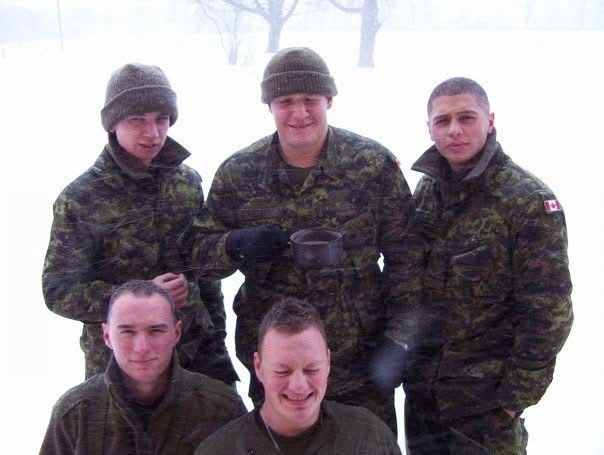
More than anything, it changed the way I thought about leadership. Leadership isn't something you're given because someone hands you a title. It's something you earn.
You earn it by setting the standard, by taking ownership when things go wrong and by showing up for your team. I've carried that with me ever since.
Always go the extra mile.
Here's another thing that surprises people: when I was younger, I thought I was going to build a career in hospitality.
It all started on a family trip to Aqaba, Jordan where we stayed at a Holiday Inn and I quickly became captivated. I noticed the details, how people were welcomed and how the space made you feel. How seemingly small things could completely change someone's experience.
I was hooked. I eventually studied Hospitality Management at Toronto Metropolitan University and worked with Fairmont Hotels and Mariposa Cruises. Those experiences gave me a deep appreciation for service and operational excellence and taught me that great experiences don't happen by accident.
Obviously, my career went in a different direction, but I've never really left hospitality behind. I'm not someone with a tech background, what excites me is creating spaces where people feel welcome, supported and genuinely want to be.
That mindset followed me to DMZ. From day one, I thought about more than programs or office space. I thought about the founder experience: how people feel when they walk through our doors, whether they feel like they belong and whether they want to keep coming back.
Serve first, lead second.
In 2012, I co-founded the Supa Maasai Foundation, a non-profit supporting Maasai communities in Kenya, with a particular focus on women and youth.
Over several years, I spent months living and working alongside local communities. We helped establish a women's cooperative, supported educational opportunities and worked on projects designed to create long-term economic opportunity.

But what stayed with me most wasn't any one project, it was learning when not to lead.
It's easy to walk into an organization or problem and assume leadership means having the answers. It doesn't. The most meaningful progress came when we listened first. When we built trust. When we understood what people actually needed instead of assuming we already knew.
That experience fundamentally changed how I thought about leadership.
When we focus on serving others, we can create the conditions for people and communities to grow in ways that last. That's something I think about all the time at DMZ.
Adapt and keep moving.
Change has been a pretty consistent theme throughout my life.
I was born in Jordan, and my family immigrated to Canada in the early 1990s. Growing up, we moved around a lot. Between Ontario, Quebec and time back in Jordan, I attended ten different elementary schools.
As a kid, I wasn't thinking, “This is going to make me a more adaptable leader one day.” I was just trying to figure out a new school, make new friends and find my place.
But looking back, those experiences taught me how to adapt quickly. How to walk into unfamiliar environments, how to build relationships with people I didn't know and how to become comfortable with uncertainty.
Those lessons have turned out to be pretty useful working to support our startup ecosystem. In entrepreneurship, changes are constant. Markets shift, technologies emerge and startups succeed and fail. Priorities change. The playbook that worked yesterday might not work tomorrow. You can't control all of it, but you can control how you respond.
The experiences became the playbook.
When I joined DMZ in 2014, I didn't come from the tech or startup world. At the time, that might have looked like a disadvantage. Today, I see it as one of my greatest strengths.
I brought the discipline I learned in the military, the obsession with service excellence I developed through hospitality, the community-first perspective I gained in Kenya and the resilience that came from constantly adapting to change.
Those experiences shaped how I approached building DMZ. Over the past decade, we've grown from a space where students could build their companies into a world-leading incubator with operations in 15+ countries. A lot has changed, but the principles I lead by haven't.
Get more lessons in leadership, plus the latest from DMZ’s community of founders, by subscribing to our Tech Talk newsletter.